Current Version: 2026.10-21
Download the file, extract it, and use the browser of your choice to open. It is not a file that will work well on cell devices due to the screen size and .html file type. The file size is less than 2MB (very tiny) and does not require any special software other than a browser. Place it on your desktop for easy reference. All element detail links are to reputable and quality websites including YouTube, IBM, OpenAI, Anthropic, and others.
The Periodic Table of AI is a free interactive visual reference framework that maps the AI landscape into discrete, named concepts, organized the same way a chemist reads elements: structured, scannable, and designed to show how things relate to one another. It is updated regularly and it exists because the AI conversation moves faster than most organizations can absorb, and professionals who need to make decisions about it rarely have a clean starting point.
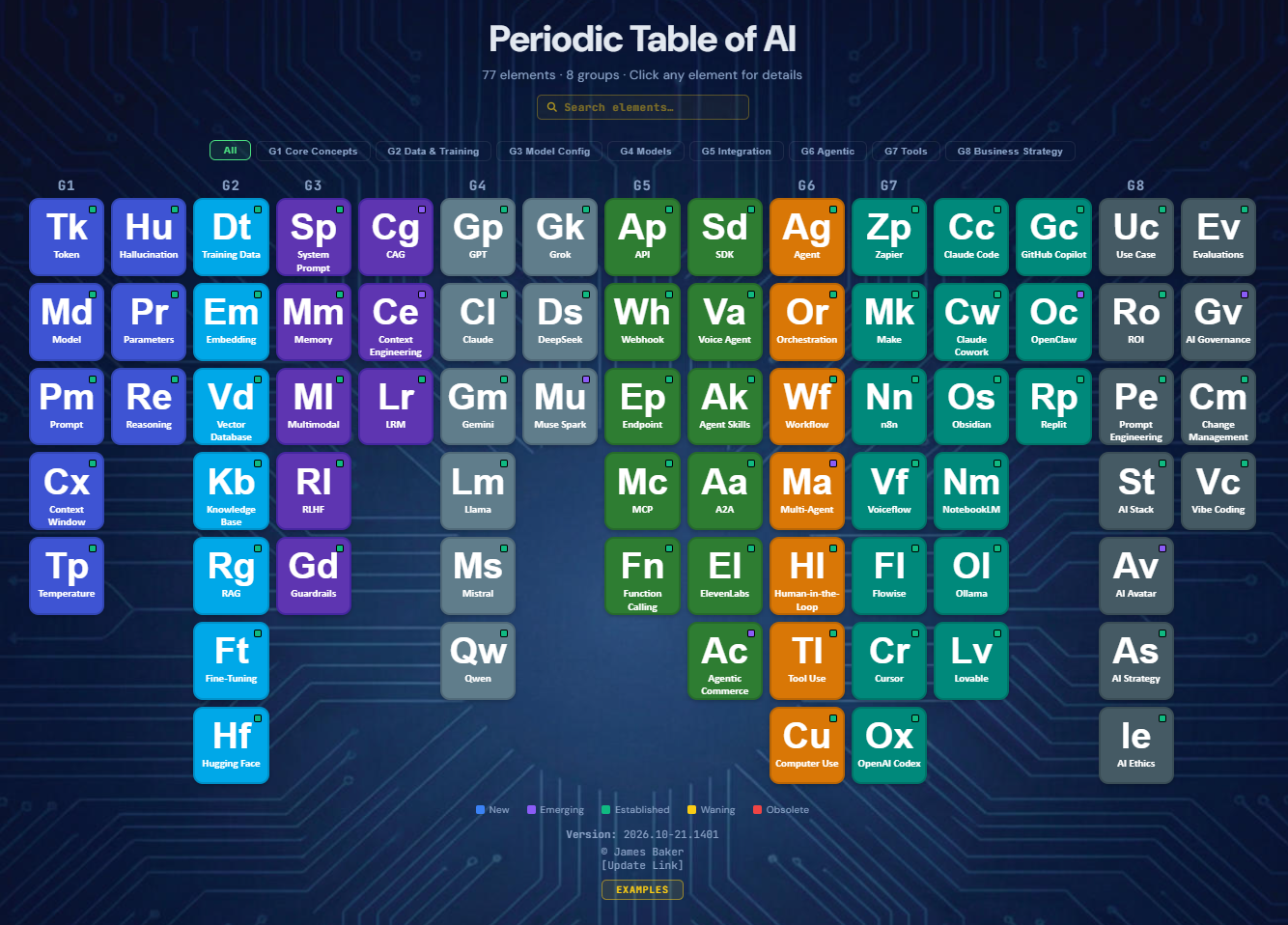
The table is not exhaustive but contains a number of different elements with enough information to help explain each topic to proper audiences. It is organized into 8 groups, each representing a functional layer of AI:
G1 Core Concepts -- the language of AI itself at a granular level. Without this layer, every other conversation breaks down.
G2 Data & Training -- how AI systems learn and what they learn from. This layer determines the quality of everything downstream.
G3 Model Config -- the controls that shape how a model behaves before it ever sees a user. This is where safety, personality, and capability boundaries are set.
G4 Models -- the engines. This layer tells you who the major players are and what differentiates them.
G5 Integration -- how AI connects to the rest of your business. Without this layer, AI stays a demo.
G6 Agentic -- AI that acts, decides, and executes across multi-step tasks without constant human direction. This is where AI shifts from tool to worker.
G7 Tools & Platforms -- the products and environments where AI gets built and deployed. This layer is where strategy meets execution.
G8 Business Strategy -- the layer most organizations should start with and rarely do. It frames AI as a business decision, not a technology one.
Each element tile shows the symbol, full name, group, and a colored relevance indicator -- New, Emerging, Established, Waning, or Obsolete.
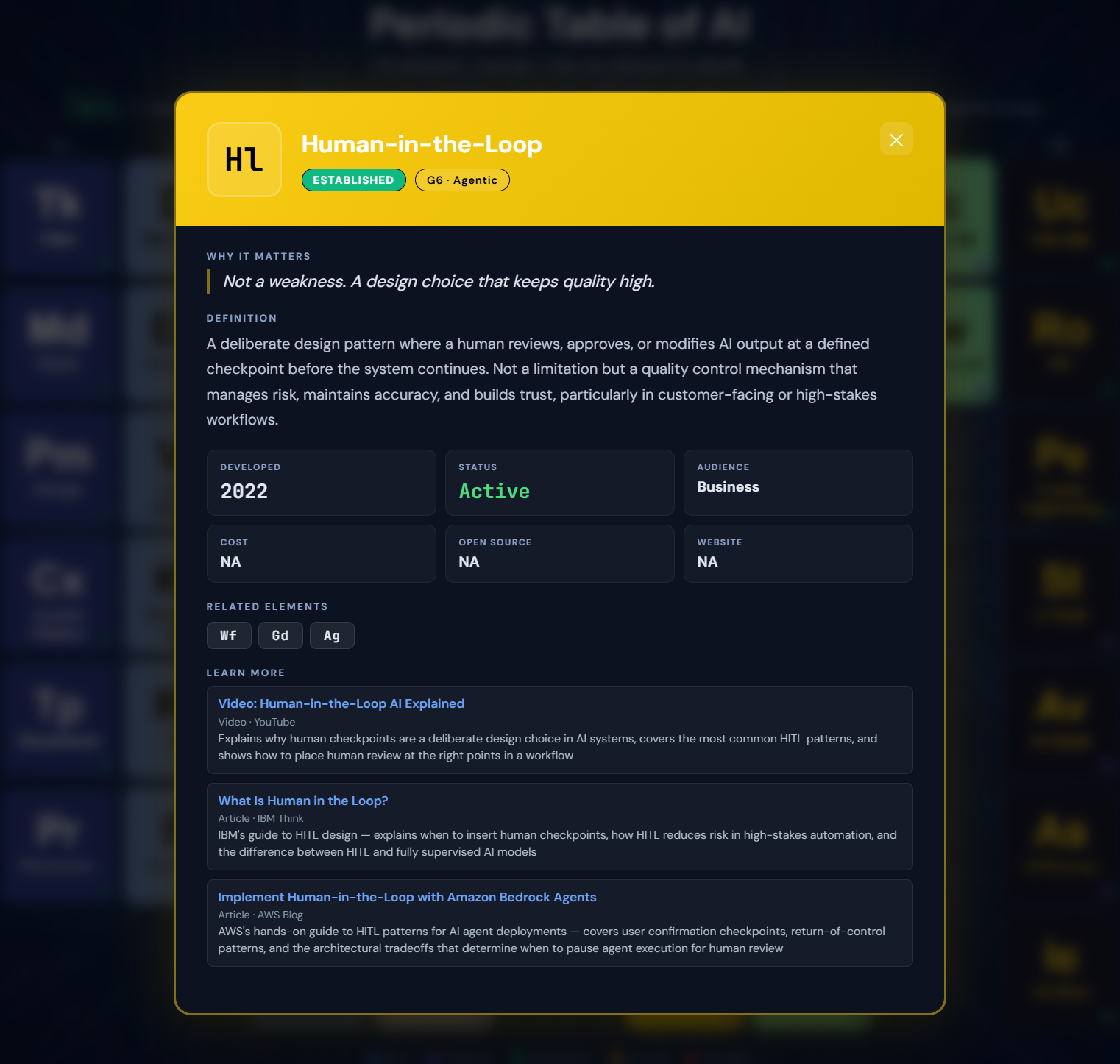
Clicking any element opens a detail panel showing a plain-language definition, a "Why It Matters" takeaway, the year it emerged, its audience, cost profile, open-source status, related elements, and three curated Learn More resources so anyone can go from nothing to informed without a search engine.